

Why Your Audience Will Love This Episode
What makes Dr. Huddleston a standout guest for healthcare-focused shows.
A Practitioner Who Never Left the Bedside
After 30+ years as an active hospitalist at Mayo Clinic, Dr. Huddleston doesn't speak in abstractions. Every insight comes from a career spent in clinical rooms, not conference rooms.
She Named a Problem No One Else Had Named
The "Messy Middle," the structural gap between what hospital leadership decides and what reaches the bedside, is a concept your listeners have lived but never had language for. This episode gives it to them.
The Person Who Reviewed Every Death at Mayo Clinic
For nearly 12 years, Dr. Huddleston reviewed 100% of in-hospital deaths personally, training every reviewer herself. What she learned about how hospitals quietly fail patients is unlike anything your audience has heard.
An MD Who Went Back for an Engineering Degree
Her Master's in Industrial Engineering and Lean Six Sigma Black Belt give her a dual lens that reframes healthcare quality in terms of systems design: rare, credible, and deeply practical.
She Translates Complexity for Any Audience
Whether your listeners are frontline nurses, hospital administrators, or patient advocates, Dr. Huddleston makes thirty years of quality science immediately usable. Her speaking style is direct, evidence-based, and empathetic.
A Track Record Across Four Continents
Past President of the Society of Hospital Medicine. Harvard Macy Scholar. NSF-funded researcher. International keynote speaker. Your listeners will feel the weight of that experience in every answer.
About
Dr. Jeanne Huddleston, MD, MS, FACP, FHM is a practicing internal medicine hospitalist, industrial engineer, patient safety researcher, and the architect of a methodology that has shaped how healthcare organizations learn from patient harm for more than two decades. As Mayo Clinic's first hospitalist and later the designer of its 100% Mortality Review System, she spent eleven years reviewing every in-hospital death, training every reviewer herself using a standardized seven-step process she originated. That work, published in the Journal of Patient Safety in 2014, kept surfacing the same structural problem: the gap between what hospital leadership decided and what actually reached the bedside was not a communication problem. It was an operating system problem. No one had ever been trained to work in it.
She returned to school in her late forties for a Master's of Science in Industrial Engineering, Certificate of Statistics, and a Lean Six Sigma Black Belt, then applied that systems-design lens to the further development of Mortality Review as a tool to learn the epidemiology of process and system failures in American healthcare delivery. She also applied this intellectual rigor to the full arc of her thirty-year QI career. The result was two organizations built to close that gap from two directions: HB Healthcare Safety, an active AHRQ Patient Safety Organization (PSO) working with 103+ hospitals to learn from deaths and other adverse outcomes (published in BMJ Open Quality and Safety, 2025); and Influence Ignited!, where she teaches her QI Operating System curriculum to the frontline healthcare team members and QI professionals who have been handed tools for thirty years but never an operating system for using them.
A past President of the Society of Hospital Medicine, Harvard Macy Scholar, and NSF-funded researcher, Dr. Huddleston is currently a Professor of Medicine and hospitalist at Mayo Clinic, holds active board certification in Internal Medicine, and has delivered keynote addresses across four continents.
Key Topics
Why 90% of QI Projects Stall Before They Improve Anything, and the Operating System Gap That Explains It
Healthcare quality improvement has spent thirty years building better tools, better measurement frameworks, and better methodology. Improvement rates have not kept pace. Dr. Jeanne Huddleston, MD, MS, practicing hospitalist, industrial engineer, and founder of HB Healthcare Safety, argues that the field has been solving the wrong problem. After three decades leading, studying, and systematically analyzing every QI initiative she participated in, she identified the pattern that explains why strong projects, led by capable people with genuine organizational support, still stall: they were given tools, but never an operating system for using them. In this episode, Dr. Huddleston walks through exactly where the breakdown happens, between the moment a problem is identified and the moment an improvement is sustained, and introduces the structural gap she calls the Messy Middle, that accounts for the failure. This is not a motivation problem, a leadership problem, or a staffing problem. It is an architecture problem. And it has a solution.
What More Than Two Decades of Reviewing Every Death at a Major Academic Medical Center Taught Me That No One Is Teaching QI Teams
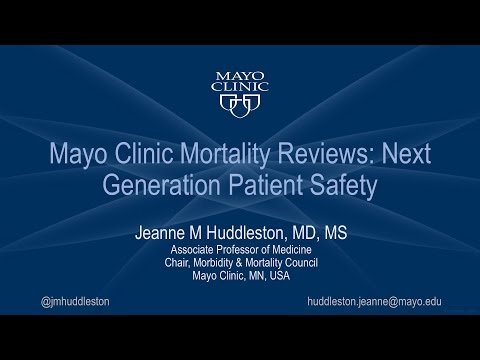
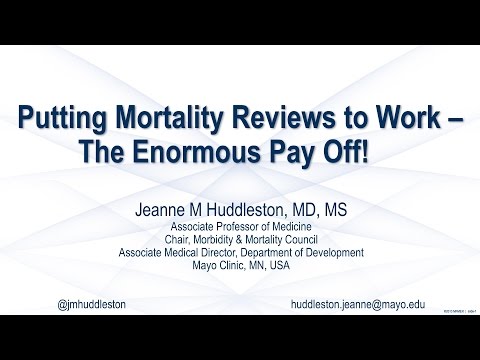
In 2003, Dr. Jeanne Huddleston designed and launched a 100% mortality review system at one of the most-watched academic medical centers in the world, meaning every in-hospital death was reviewed, by a trained reviewer, using a standardized seven-step methodology she originated and taught personally. She led that system for nearly twelve years. The findings, published in the Journal of Patient Safety in 2014, were not what most quality leaders expected. The deaths that should have been the most visible were not the ones generating the most learning. The failures that repeated themselves most reliably were not the ones anyone was measuring. In this episode, Dr. Huddleston shares what that body of review work actually revealed about how hospitals fail patients, the patterns that showed up consistently across cases, the signals that preceded harm and were present in the record but went unrecognized, and why the way most organizations currently approach case review systematically prevents them from seeing what she learned to see. This episode is essential listening for any quality professional who suspects their current review process is producing data but not insight.
The Gap Between What Hospital Leadership Decides and What Reaches the Bedside, and Why It Is a Systems Engineering Problem, Not a Communication Problem
Every hospital leadership team has experienced it: a decision is made, a policy is written, a rollout is planned, and months later, the frontline is still working exactly as before. The default diagnosis is a communication failure. Dr. Jeanne Huddleston, who holds both an MD and a Master's of Science in Industrial Engineering, spent her career on both sides of that gap, as a frontline hospitalist and as the Founding Medical Director of the Mayo Clinic Healthcare Systems Engineering Program, and her diagnosis is different. The gap is not a communication problem. It is a structural one. There is no reliable architecture connecting leadership intent to frontline workflow, and building that architecture requires a specific set of skills that the QI field has never formally taught. In this episode, she breaks down the engineering principles that explain why the gap persists, what organizations are doing that inadvertently maintains it, and what the translation function that closes it actually looks like in practice, with examples drawn from thirty years of frontline clinical work and patient safety research.
How Industrial Engineering Principles Are Transforming the Administrative Burden of Quality Improvement Case Review
Quality improvement case review is one of the most time-intensive, manually dependent processes in healthcare administration, routinely requiring sixty to two hundred forty minutes per case, before a single improvement action is taken. Dr. Jeanne Huddleston spent more than two decades building and refining a proprietary case review methodology, beginning with the Mayo Clinic Mortality Review System she designed in 2003 and continuing through the founding of HB Healthcare Safety, now an active AHRQ Patient Safety Organization working with more than one hundred hospitals. In this episode, she describes how industrial engineering principles, applied systematically to the case review workflow, are compressing review time, standardizing output, and enabling organizations to extract learning from cases that previously would have been closed without insight. For quality leaders who feel buried in cases and under-resourced for the analysis work, this conversation reframes the problem and describes a path forward.
Why Healthcare Quality Improvement Has Taught Tools for 30 Years but Never Taught an Operating System, and What Happens When It Finally Does
The QI field has produced an extraordinary body of methodology: Lean, Six Sigma, PDSA, RCA, FMEA, and dozens of derivatives. Most improvement professionals have been trained in at least several of them. And yet, improvement rates in American healthcare remain stubbornly inconsistent. Dr. Jeanne Huddleston's argument, developed over thirty years of clinical practice and quality leadership, is that the field has invested in tools while neglecting the operating system that makes tools work. In this episode, she introduces her QI Operating System framework, describes the specific structural elements that have been missing from standard QI training, and shares what she has observed in organizations that have begun teaching the operating system alongside the tools. For listeners who have wondered why capable, motivated teams still struggle to sustain improvement, this conversation provides a framework for understanding why and a direction for what to do.
What a Mortality Review Actually Reveals About the Way Hospitals Fail Patients, and It Is Not What Most Quality Leaders Are Measuring
Most hospital mortality review processes are designed to identify outliers: cases where something went clearly, documentably wrong. Dr. Jeanne Huddleston spent eleven years running a system designed to do something harder, to find the pattern beneath the outliers, the recurring process and system failures that create the conditions for harm across many cases, not just one. In this episode, she describes what that longitudinal body of review work revealed, the categories of failure that appeared most consistently, the organizational behaviors that made those failures invisible to standard review processes, and why the way most quality teams currently frame mortality review is structurally incapable of generating the learning that would actually reduce harm. This is a conversation for quality professionals, clinical leaders, and patient safety advocates who want to understand not just what happened in a single case, but what is happening in their organization.
See Dr. Huddleston in Action
Video clips and speaking samples.
Affiliations & Organizations
Institutions and organizations Dr. Huddleston has founded, led, or been affiliated with.

Credentials & Achievements
A record built over 30+ years of clinical practice, research, and leadership.